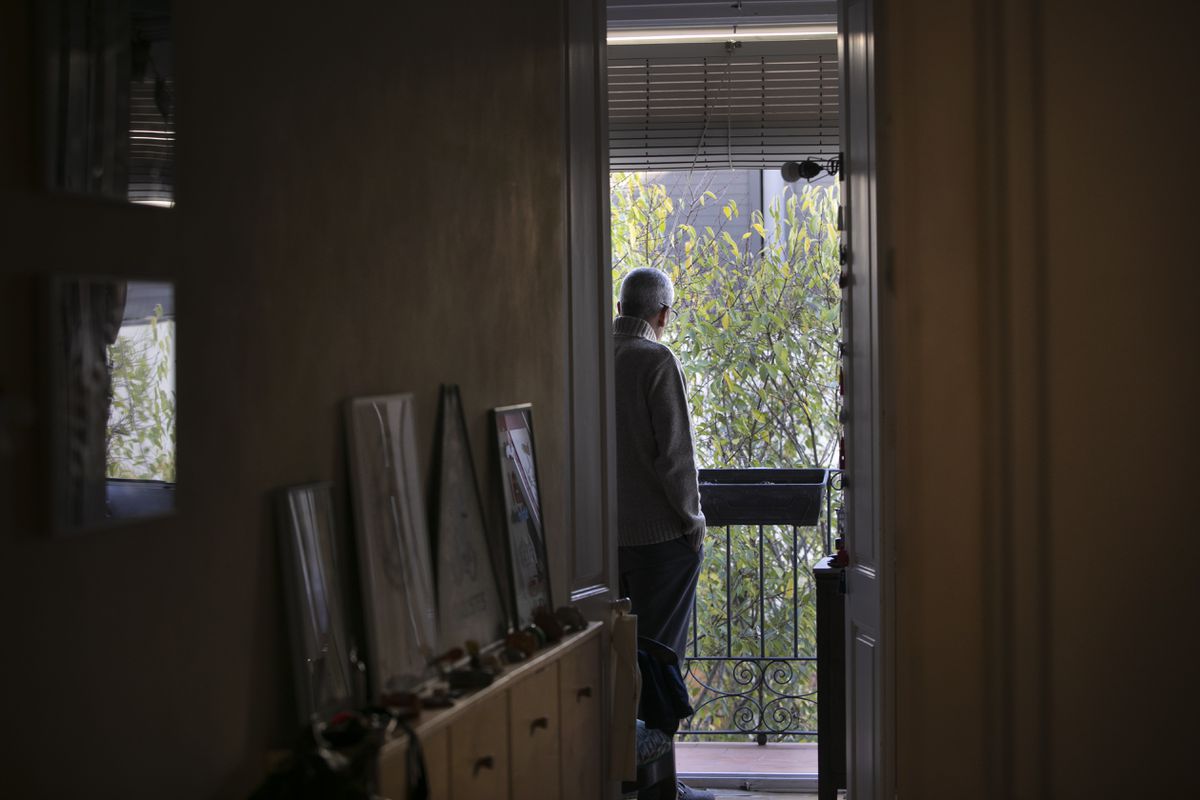
Look out the window of the house: do you see three trees? Is there 30% vegetation cover in your neighborhood? Do you live less than 300 meters from a park? The questions correspond to the 3-30-300 rule proposed by the urban forester Cecil Konijnendijk to create healthier cities, because green (be it trees, plants or vegetation on roofs) helps to mitigate high temperatures, prevent flooding and improve the population health.
The Institute for Global Health (ISGlobal) has just published a study, carried out in Barcelona, which shows that living near trees and green areas is correlated with better mental health and less medication consumption. This same scientific entity, promoted by the La Caixa Foundation, He has co-directed another work with the United States Forest Service (USDA) that demonstrates that planting street trees can save lives. In this case, the city studied is Portland.
ISGlobal researchers explain that the study on the 3-30-300 rule in Barcelona is the first to measure it in a city. The good news is that it confirms the improvement it produces: we know the way. The bad news is that the city gets a disastrous note: only 4.7% of the population complies with the three precepts of the green spaces rule. 62.1% have an “important” green space less than 300 meters away, 43% have at least three trees 15 meters from home and only 8.7% live in an area with “sufficient surrounding greenery”. . And the worst figure: almost 23% of residents do not comply with any of the three provisions. “There is an urgent need to provide more green spaces to the citizenry. We may have to dig up asphalt and plant more trees, which will not only improve health.
The report took data from the 2016 Public Health Survey of the Barcelona City Council Public Health Agency, which evaluated the mental health of residents between the ages of 15 and 97. On average, 18% declared having poor mental health, 8.3% who had visited a psychologist in the last year and between 8.1% and 9.4% who had taken tranquilizers or antidepressants in the last two days. What the researchers did was cross-reference the data from the municipal survey (and areas of residence of the respondents), with indicators of green spaces, sensors and land cover maps. The sample is very representative, say the researchers. The study revealed that compliance with the full rule “was clearly associated with better mental health, less medication use, and fewer visits to the psychologist.” which registered a statistically significant association in the case of resorting to professionals, according to ISGlobal. And of the three variables, the one that weighs the most is the green coverage in the environment.
Researcher Evelise Pereira, also a participant in the work, explains that Barcelona (which has 584 hectares of urban parks, 242,000 trees adding streets and parks, and 1,156 hectares of urban greenery) may seem like a city with a lot of green coverage, “but the Collserola and Montjuic parks have a lot of weight overall, when few people have them nearby”. “In Barcelona there are few parks and there are very hard squares, the vegetation cover is not well distributed”, she points out. “There are many people who do not have enough trees, coverage or parks nearby,” admits Pereira, who is committed to “intervening at different scales, to benefit different ages: trees for everyone, plants and green areas for children…”.
“Given the urban structure of Barcelona and its population density (16,000 inhabitants per square kilometer), there is little space available for parks and open spaces. Hence, the spaces available to change are the streets and the roofs of the buildings”, understands Pereira, who highlights “the importance of initiatives such as the Superilla [superblock] or the conversion of the streets of the Eixample into green axes” of the team of the Mayor Ada Colau. “We can’t remove buildings, but asphalt.” The transformation of the streets, she adds, “also has benefits for the community, healthier mobility and social cohesion.” La Superilla means planting 400 trees, the City Council has announced, and also greener. Go from 1% to 12% of the space. Pereira points out the importance of having both trees and plants at different scales. Creating gardens, he points out, benefits children, who are shorter in stature.
In the study carried out on the city of Portland (in Oregon, west coast of the United States), the particularity is that the researchers had precise data from the NGO Amigos de los Arboles, which has been planting trees in the city for three decades. . The conclusion is that the number of trees is associated with a significant reduction in non-accidental (20%) and cardiovascular (6%) mortality, when the trees are 15 years old or older. The older and larger the specimens are, the greater their beneficial effect. “Conserving mature trees can be especially significant for public health,” the institute notes.
Unlike studies that use satellite images that do not distinguish the different types of vegetation, in this case the NGO has recorded when and where it planted almost 50,000 trees between 1990 and 2019. The researchers analyzed the trees in a census area with 4,000 inhabitants and associated the information with mortality from cardiovascular, respiratory, or non-accidental causes, with data from the Oregon Health Authority. It turned out that in the neighborhoods where more trees had been planted, the mortality rates were lower, and especially in men and those over 65 years of age.
The study does not provide direct evidence on the mechanisms by which trees improve health, but the fact that older specimens have a greater positive effect “is revealing,” because they have a greater capacity to absorb pollution, moderate heat, and reduce noise: three factors related to the increase in mortality. “It suggests that planting street trees benefits both,” says Geoffrey H. Donovan, of the USDA Forest Service and first investigator on the paper.
Payam Dadvand, ISGlobal researcher and lead author of the study, adds that “the results provide a solid scientific basis to guide tangible interventions, such as planting trees, aimed at increasing the longevity of urban residents.” “We can go to City Hall and tell them that for every n trees you plant, you can avoid m hospitalizations or mortality,” he says. Dadvand is more critical of the superilles materialized to date, due to the scarcity of new green. He notes that few new trees are planted and “often they don’t even plant them correctly and put them in huge plant boxes.”