


One of the most curious fortifications from the Middle Ages is located three kilometers from Palma de Mallorca. Bellver Castle is located on a hill 112 meters high, dominating the bay and much of the island. It is peculiar because it is the only one in Spain and the oldest in Europe to have a circular floor plan, together with four large towers oriented towards the four cardinal points.
It was built between 1300 and 1311 by direct order of King Jaime II of Mallorca in order to have a defensive building that, in turn, would serve as a residence. Strong on the outside, elegant on the inside, it is a masterpiece of Catalan-Gothic architecture that, after 700 years, still impresses. These are some of its secrets.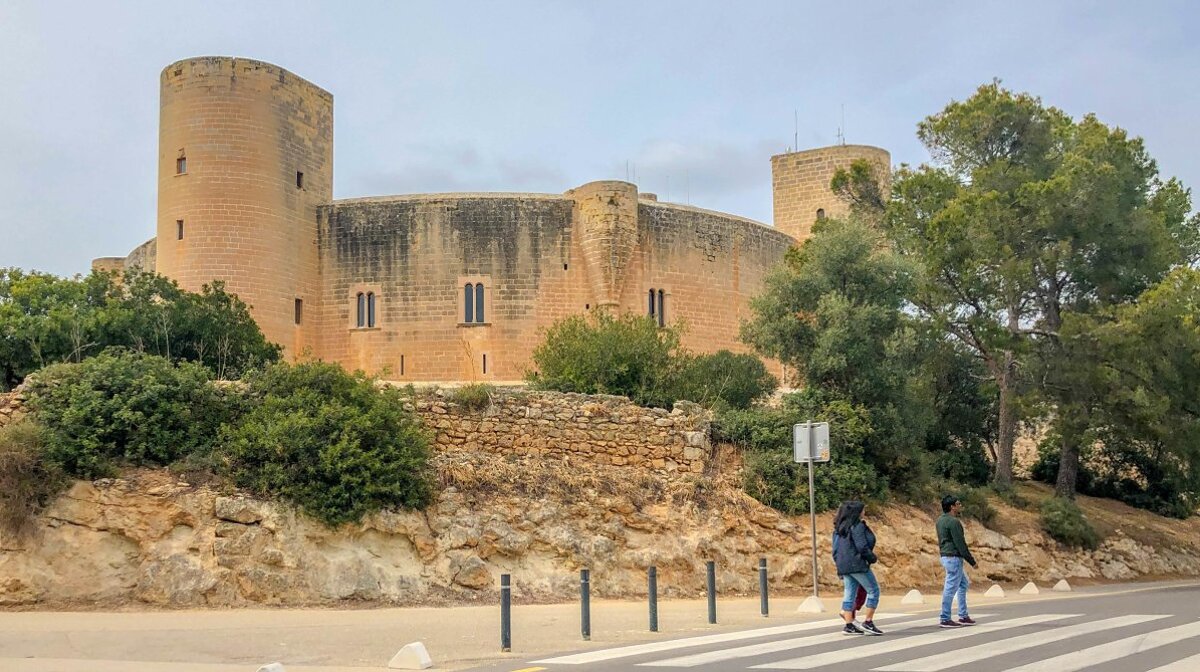 Views from Bellver Castle, Palma de Mallorca
Nice views
Although the castle is located in the Bellver forest, it is also located on a peak that has unbeatable panoramic views. From it you can see the city, the port, the Serra de Tramuntana and the entire Pla de Mallorca area, and its name derives from its beautiful views, from the old Catalan bell veer , which means beautiful view.
An innovative work
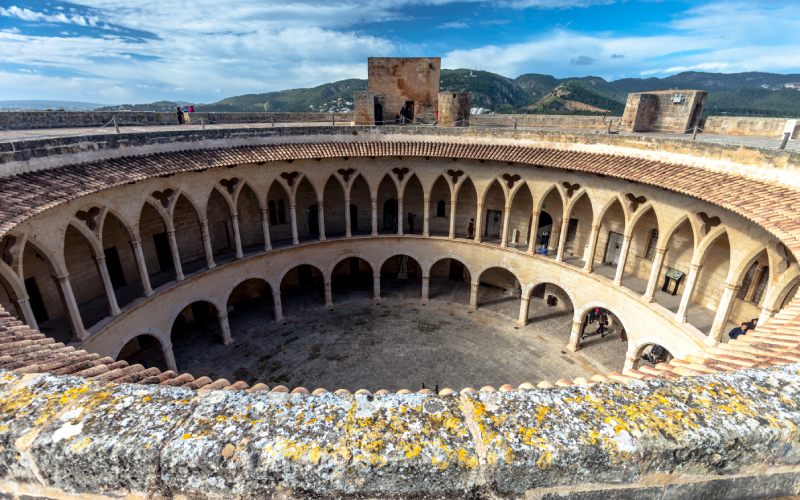 Circular shape of Bellver Castle, Palma de Mallorca
Pere Salvat designed a unique and innovative castle in medieval Europe, it is said that it could have been inspired by the Monte castle in Naples, which has an octagonal shape. The construction consists of a Gothic-style building with a perfectly circular ground plan, which is organized around a central courtyard, also circular, with four large towers, one of them, the so-called main or homage tower, which is separated from the building and joined by a bridge, while the rest of the towers are embedded in the main body.
Prison of illustrious characters
During the War of Succession (1700-1715), the fortification became the main political and military prison on the island, where those who were in favor of Philip V and against Archduke Charles of Habsburg who aspired to the throne were locked up. of Spain, at the end of the conflict, served to lock up the Austrian followers.
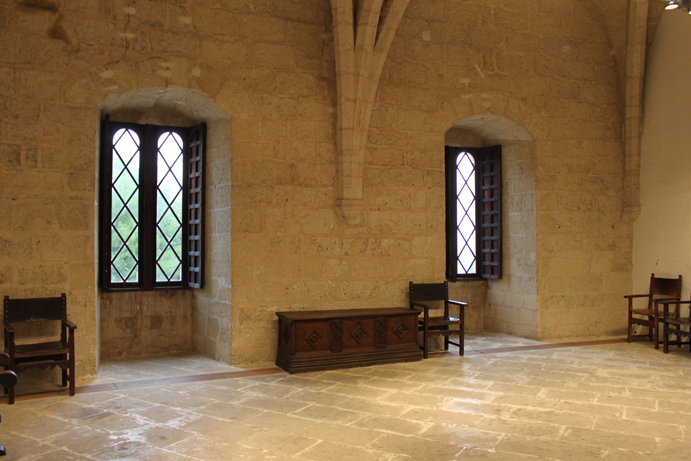 Interior of the Bellver Castle
The homage tower is 33.37 meters high, it is the tallest in the castle, it is divided into four rooms, the one at the bottom is known as ‘the pot’, and was designed to be a water tank with a only opening at the top, which became a cruel punishment for many inmates.
Illustrious prisoners were within its walls, such as the intellectual Gaspar Melchor de Jovellanos, the astronomer and politician François Aragó or the liberal general Luis Lacy. Already at the time of the Spanish Civil War (1936-1939), more than 800 republican prisoners defending the legitimate government that emerged democratically from the polls were locked up.
Built with native stone
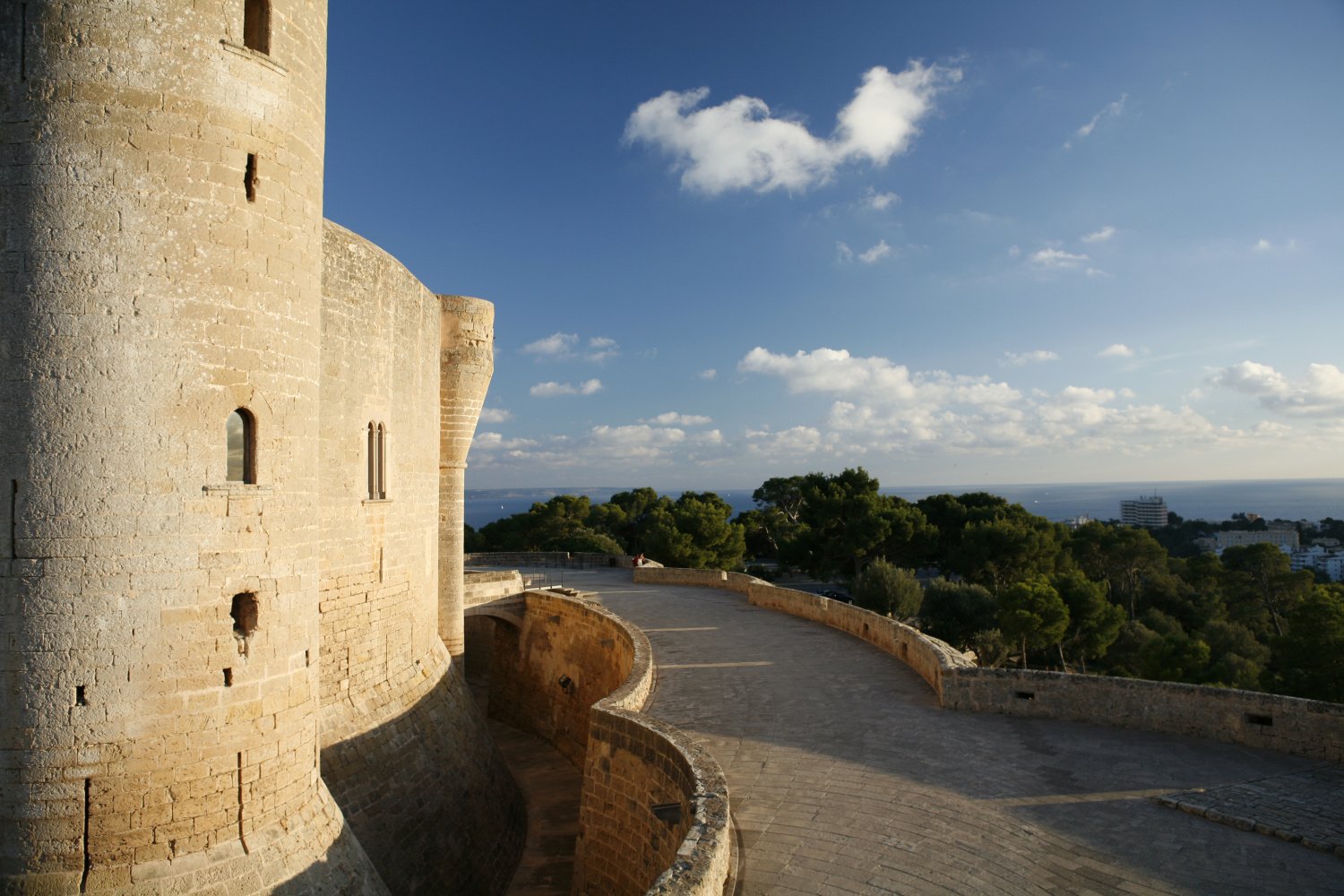 Homage tower in Bellver Castle
A sixth of the surface of the territory of Mallorca is made up of marès , an easy-to-work calcarenite stone, which is part of the landscape and identity of the island. Buildings such as La Seu cathedral, La Lonja, and the old city walls are made with marès, which is also the material used to build this castle.
From the Middle Ages to the 18th century, sandstone extraction was carried out in the area near the construction or in places near the sea to facilitate its transport. So part of the stone used was extracted from an underground quarry that, at a depth of between 40 and 60 meters below the castle, bores a large part of the mountain, as well as from other quarries in the surrounding forest and towns such as Portals Vells and Santanyi.
Headquarters of the City History Museum
 Interior of the Bellver Castle
It is currently the headquarters of the City History Museum, the Bellver Castle , it consists of eight of the castle’s rooms, six of which cover different periods of the island’s history, from the Talayotic settlements to the 20th century, passing through the Roman conquest in the 123rd century BC and the foundation of the current urban nucleus, the Muslim period from 903, the Catalan conquest in 1229, the establishment of the Kingdom of Majorca (1276-1349), the construction of the Renaissance walls of Palma and its demolition in 1903.


