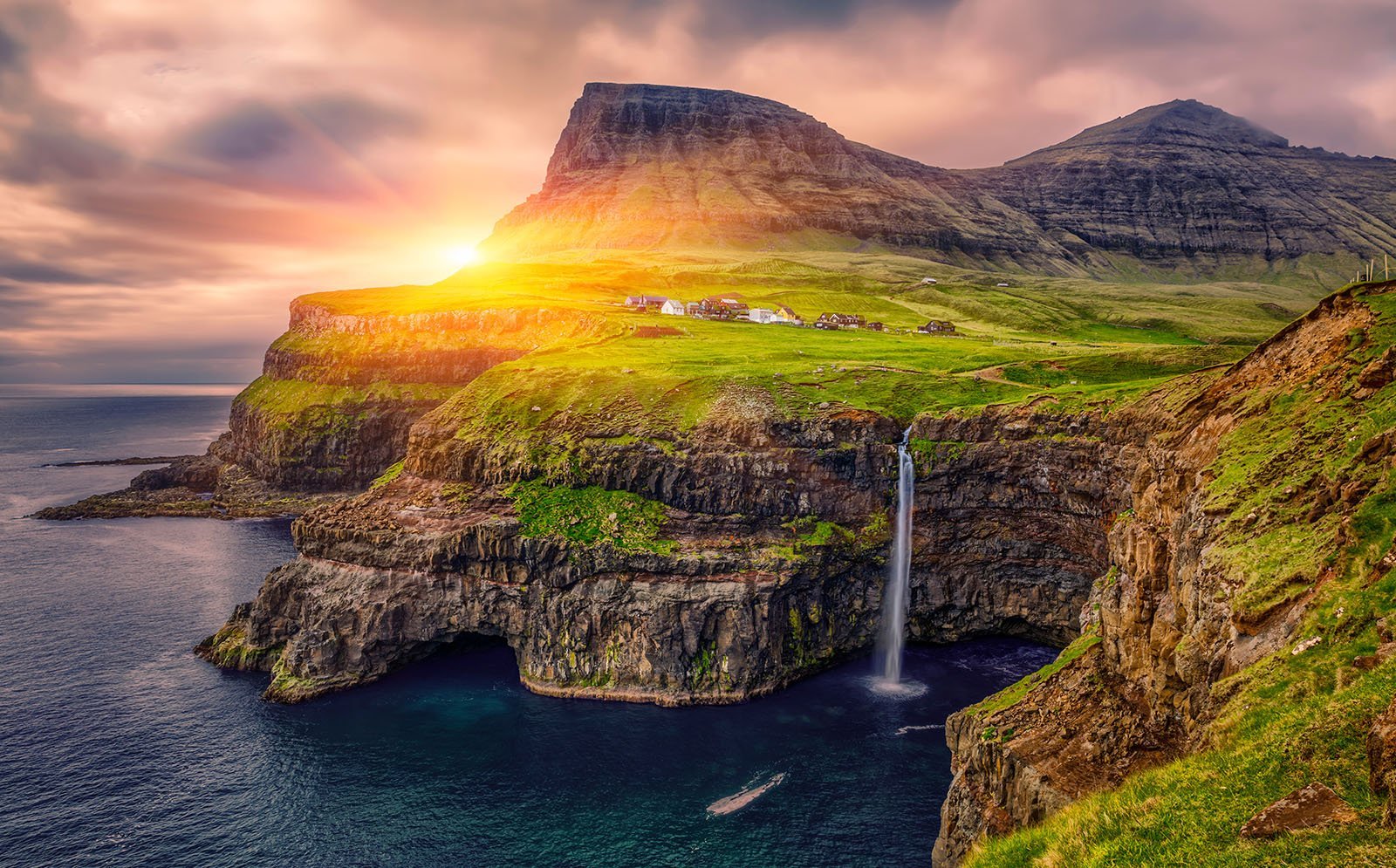
The fierce landscapes of the Faroe Islands are virtually unknown among tourists. Its isolated situation has meant that the archipelago has gone unnoticed, but just by setting foot in its territory, it irremediably manages to steal our hearts.
Here our gaze will not know where to go, to the green plains where the sheep graze, to the mountains and steep cliffs or to the waterfalls that fall with a roar. But either way, this isolated territory will satisfy all travelers, whether they are looking for a place to relax and listen to nothing but silence or feel the adrenaline rush while practicing some adventures.
Endless curiosities
The Faroes officially belong to Denmark , but are self-governing in most matters. And although we know how to locate the Danish country on a map, with the islands we have it more complicated. The archipelago is located halfway between Scotland and Ireland, 257 kilometers from the nearest neighboring territory, and is made up of 18 land masses of volcanic origin (17 of them inhabited) separated by straits and fjords, but united by “a network of roads, tunnels and ferry lines”, they tell from the Tourist Office.
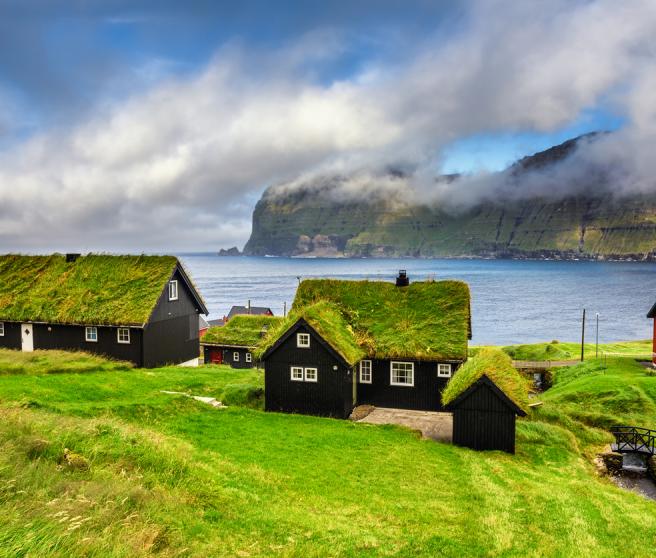
Mikladalur village in the Faroe Islands.
Its territory is not very extensive, but it is full of beauty and endless curiosities that will blow our minds. To begin with, there are 50,000 people who inhabit the island, a figure that is laughable if we compare it with the number of sheep. The sheep population almost doubles that of humans, with around 80,000 of the species roaming the archipelago.
But that’s not all, and that small number of people is incredibly special. The population is made up of 80 different nationalities and has one of the highest life expectancies on the planet (specifically, they are ranked number 12 in the world ranking).
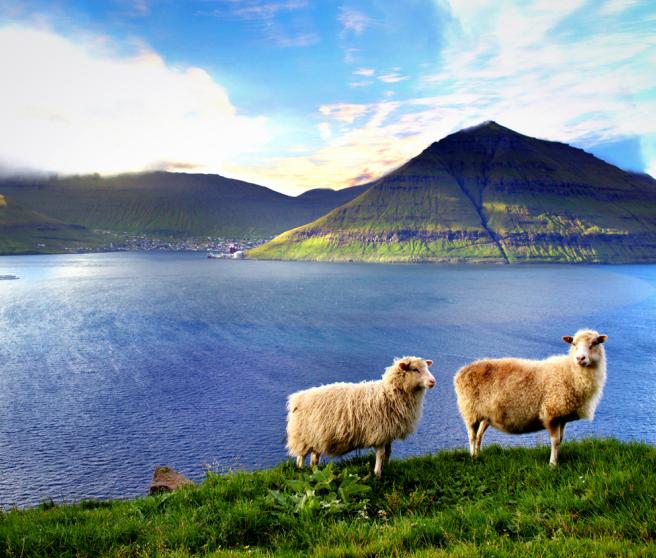
Sheep in the Faroe Islands.
And the list of singular data does not end. 50% of the archipelago’s energy is renewable, there are only five traffic lights on all the islands, it has the first underwater roundabout in the world, no point in the territory is more than 5 kilometers from the sea, the president’s personal number appears on the phone book… All in all, the Faroes are an incredibly peculiar place.
A simply perfect nature
But beyond its curiosities, what most catches our attention about the Islands are its spectacular landscapes . Lashed by the waves of the Atlantic, in these lands green valleys and steep cliffs, vast plains and high waterfalls that pour their waters directly into the sea coexist in a perfect symbiosis.
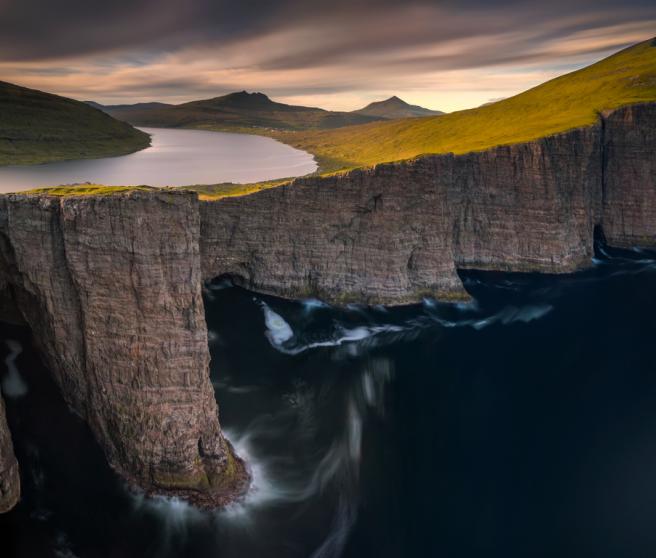
Lake Sorvagsvatn in the Faroe Islands.
In such a magical place, it is evident that endless experiences await us. Starting off easy, we can do a large number of hiking , biking or horseback routes along the islands, touring their mountains and coastal areas. All this accompanied by an overwhelming stillness and by the flight of birds over our heads, because “there are approximately 110 different species of birds in the Faroe Islands“, they say.
In search of a little more adrenaline, we can dive in the icy waters of the north and discover a new world under the depths. From algae fields to underwater caves await us on the seabed. Although it must be taken into account that “the temperature of the water varies from 4 to 10 degrees depending on the season, but the visibility is better in winter,” they detail.
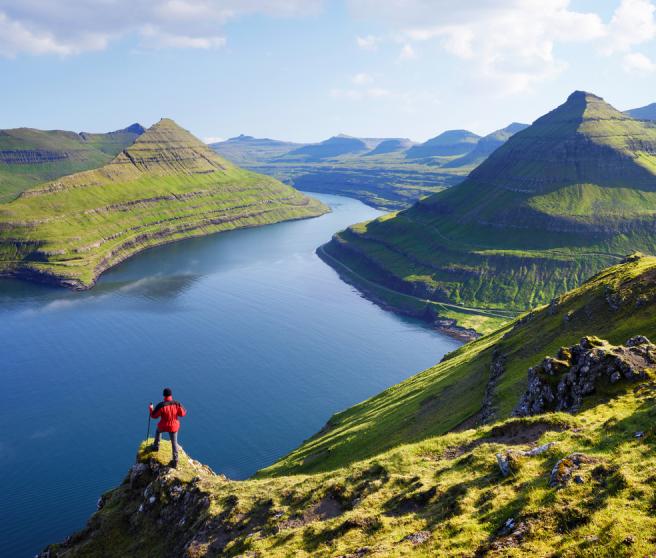
Fjord Funningur in the Faroe Islands.
In addition, on the surface we can also do other types of activities such as surfing , kayaking or even sailing in traditional boats to fish or contemplate the impressive fjords. And we can go further and dare with adventure sports such as rappelling, high hang gliding or paragliding.
A Michelin star gastronomy
To truly know a place also involves delving into its gastronomy . And how could it be otherwise, Faroese cuisine is just as interesting as its territory. From fermented lamb to wind-dried fish, passing through sheep’s head, are the curious elaborations that are prepared in this place.
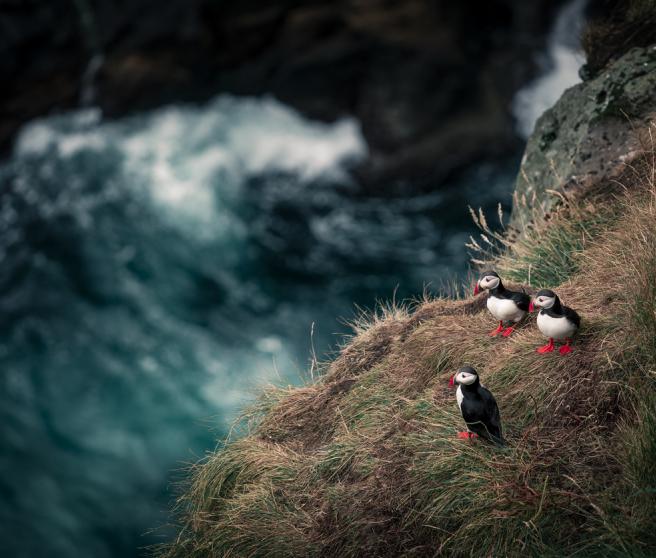
Puffins in the Faroe Islands.
All of this is made following the traditional methods that have passed from generation to generation, marked by their insularity and isolation, which has forced them to take advantage of every part of the animals they cook, in addition to “storing and preserving everything possible for the most difficult”, they explain.
In addition, hardly anything grows on their land. Only a few vegetables such as turnips, beets, radishes, potatoes and carrots are grown. However, this limitation in food has not prevented Faroese cuisine from being brilliant and innovative. In his recently opened restaurant Ræst (a word used to refer to the open-air fermentation technique), traditional Faroese dishes are served, such as cod, lamb intestines and colon on sauerkraut, all fermented of course .
But the jewel in the culinary crown is the KOKS restaurant , which could well be added to the list of curiosities, since it has 2 Michelin stars. Temporarily, it has moved to Greenland, but they have already advanced that they hope to return to the remote islands in 2024, in order to continue offering their delicious menu that adds a touch of creativity to traditional ingredients and techniques.