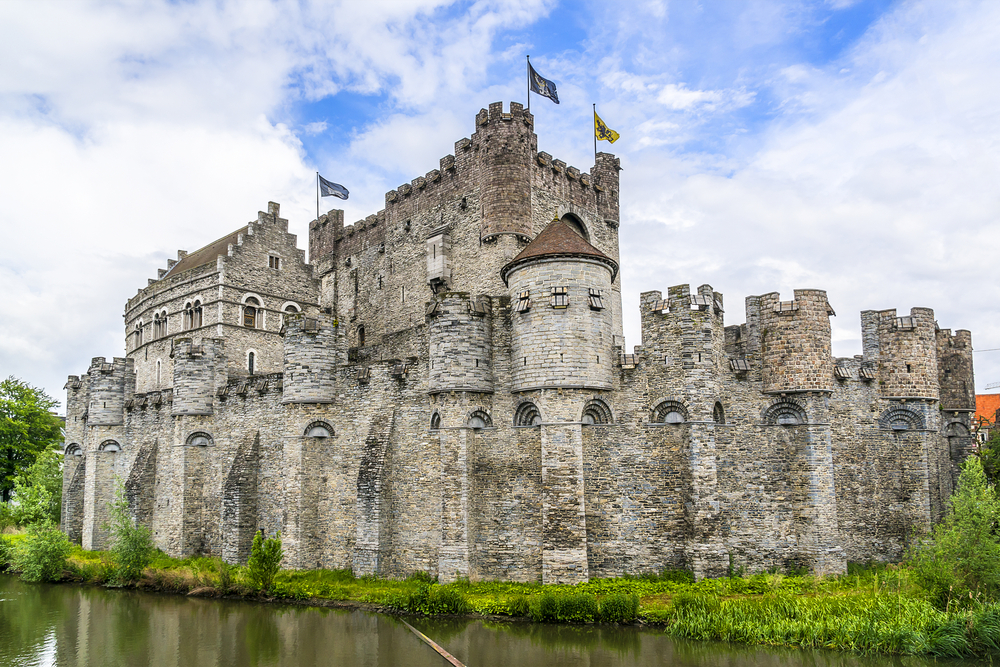
Castle of Good Love (Salamanca)
This is an enchanted castle . Legend has it that one of its former owners, the Archbishop of Fonseca, lived here his clandestine love affair with María de Ulloa, wife of Álvaro Páez de Soutomaior. She found in the religious the pleasures forbidden by a handsome husband, who ” was not a man for women “. Such was the most elegant way of describing homosexuals in the Middle Ages.
Once discovered, they suffered the rejection of the Church and their love was cut short. The ghosts of lovers could roam their rooms ever since. This is a fable that is constantly fed by the guests who stay there and the employees themselves, who report that they receive phone calls from empty rooms, mysterious noises , breaths that freeze the blood, incessant blows and the specter of lovers that travels the rooms, especially those facing the old stables. There are those who say that he has heard the Archbishop of Fonseca asking them to prepare his horse and others that a lady dressed in white has appeared to them. Buenamor Castle.
Obviously, it’s all trickery, but the stay at the Castle of Good Love fills with enchantment . The current fortress, from the 15th century, was built on the foundations of a building from the 11th century and had several owners. Among them, the Catholic Monarchs or the Fonseca, a lineage of archbishops.
Llaés Castle (Ripollés, Girona)
It was built in the 10th century and has a privileged location on top of the San Bartolomé mountain, in the Ripollés region, at 909 metres. It has been reformed as rural accommodation, with two houses that communicate with each other: the schools, with capacity for six people, and the Torre de Homenaje, with five double rooms and capacity for ten. It preserves the idiosyncrasy of a medieval castle , with a tower, parade ground, religious precinct, a small cemetery, gardens and the Romanesque-style Church of San Bartolomé. Interior of the Castle of Lláes.
It can be rented as a whole for 16 people (up to 21 if additional beds are requested) or by apartments. Its history is linked to Count Wifredo el Velloso, who founded the Monastery of San Juan de las Abbesses for his daughter Emma, the only female monastery in Catalonia until 945. As Emma was still a girl, the monastery remained in the hands of a group of priests reach adulthood. Her father endowed the monastery with numerous goods that she was in charge of expanding. Among them, this ancient castle.
To go back to its origins, you have to peek into its mysterious moats and tour its towers, magnificent for seeing the Montserrat mountain range on one side and the Pyrenees on the other. The favorite room is usually the rector’s room , as it has a large window with spectacular views. The architect of its latest transformation is Marc Guinjoan, a history teacher from Barcelona, who describes it as a small oasis.
Castle of Fonolleres (Lleida)
Its motley stone walls have guarded secrets for more than ten centuries that speak of lords and vassals and battles between Muslims and Christians, when war and religion were inextricably linked and people fought with the conviction that the kingdom of heaven awaited those who They fought fervently.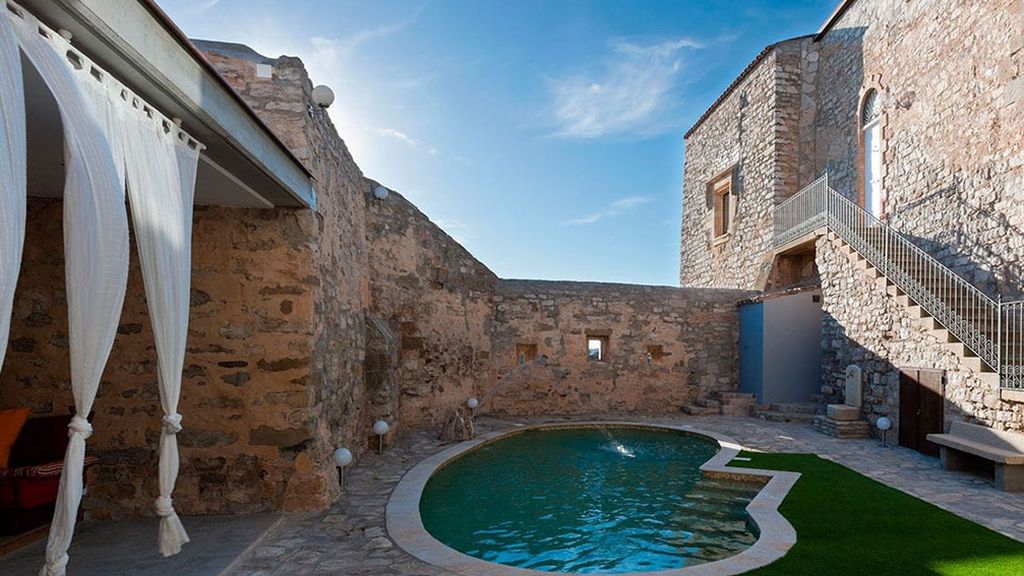 Castle of Fonolleres.
Located between Tárrega and Cervera, in the highest part of the municipality of Fonolleres, today it is promoted as a charming rural tourism mansion. It has capacity for twelve people and is rented in its entirety. Its rooms are decorated with modern and comfortable furniture. The Petra room, on the ground floor, retains the charm of a castle like no other.
A very evocative silence reigns throughout the castle. Its surroundings offer a well-kept nature and a labyrinth of paths that make the area a kind of Tuscany.
Burguillo Island Castle
This fortress takes us to Isla Centinela, located, although it sounds strange, in the province of Ávila, which makes it one of the most unique islands in Spain. 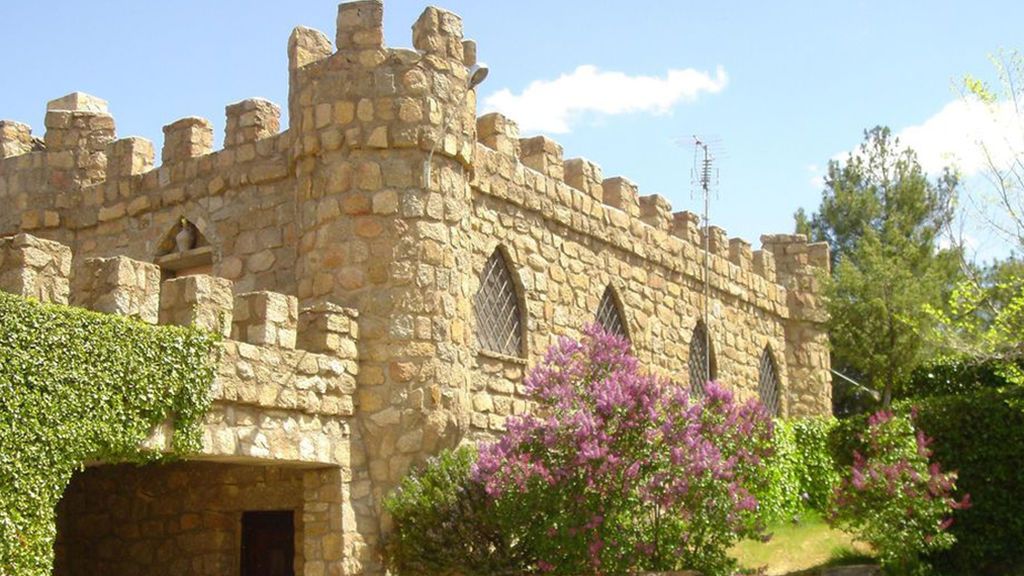 Castle of El Burguillo.
The living room stands out, with access to a battlemented terrace that communicates with the tower. As expected, the complex enjoys exceptional conditions of privacy, tranquility and scenic beauty. When the swamp dries up, the castle can be accessed by car. The rest of the year, by boat. To the south is the Valle de Iruelas natural park, with ecosystems of unique species , such as the black vulture, and a wide variety of fauna and flora.
Grisel Castle (Aragon)
This is a 14th-century Gothic citadel that its current owners saved from ruin in the 1980s. After 30 years of restoration, it has recovered its original medieval splendor and today it is a different, magical and unusual place that invites you to relive a piece of history. Each of its rooms is different from the rest and in any corner you can come across an old book, a work of art and vestiges rescued from other castles.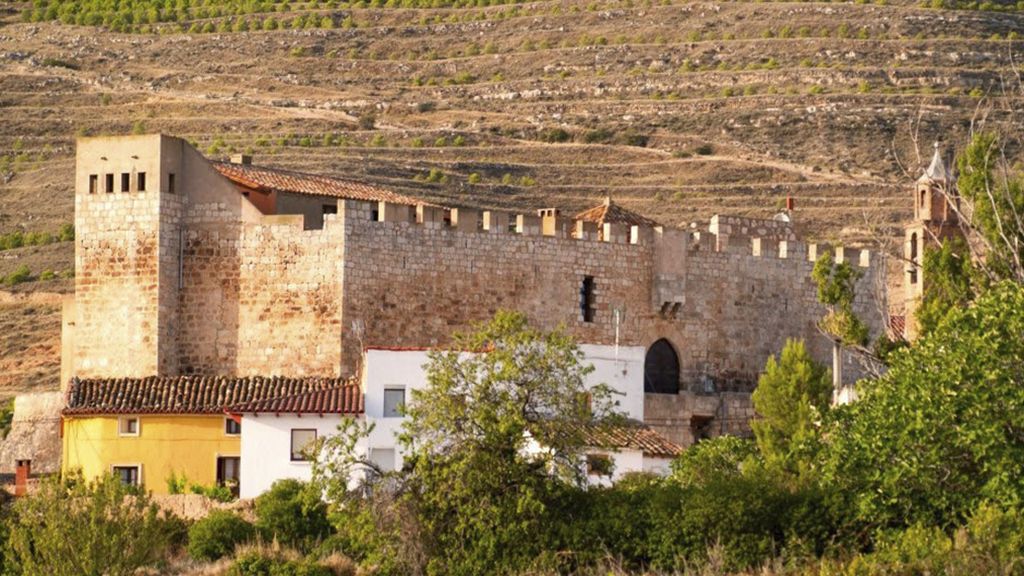 Grisel Castle (Aragón)uppers.
Built in ashlar, it has been declared a Site of Cultural Interest and retains all its defensive elements: machicolation, crenellated walls with loopholes, walkways or defensive towers. During the reconstruction work, all the modern annexes were removed and canvases, battlements and rooms were restored. Given its peculiar natural conditions, with a privileged microclimate , it was used since at least the 16th century as a summer residence.