Stroll through Persepolis, the ancient capital of Persia , visit treasures of Islamic architecture in Tehran and other cities such as Shiraz, Yazd, Kashan or Isfahan, the latter with its Naqsh-e Jahan square (Imam Square), the second largest of the world, in which mosques, palaces and gardens coexist, is an experience that will be part of our unforgettable memories.
The many mosques, with their domes and minarets , stand proudly wearing their colors while the common people live the opportunity of a new Iran that tries to forget and overcome disastrous events, with which the people suffered so much. Adobe dome in Yazd, Iran.
The former United States embassy in Tehran remains as a visitable reminder of the well-known hostage crisis in 1979. That was the year, after the overthrow of the Shah of Persia, that gave way to power to the Ayatollahs, who offered the population new airs although with cuts of freedom, fundamentally for the woman, who is covered from head to foot with the traditional costume.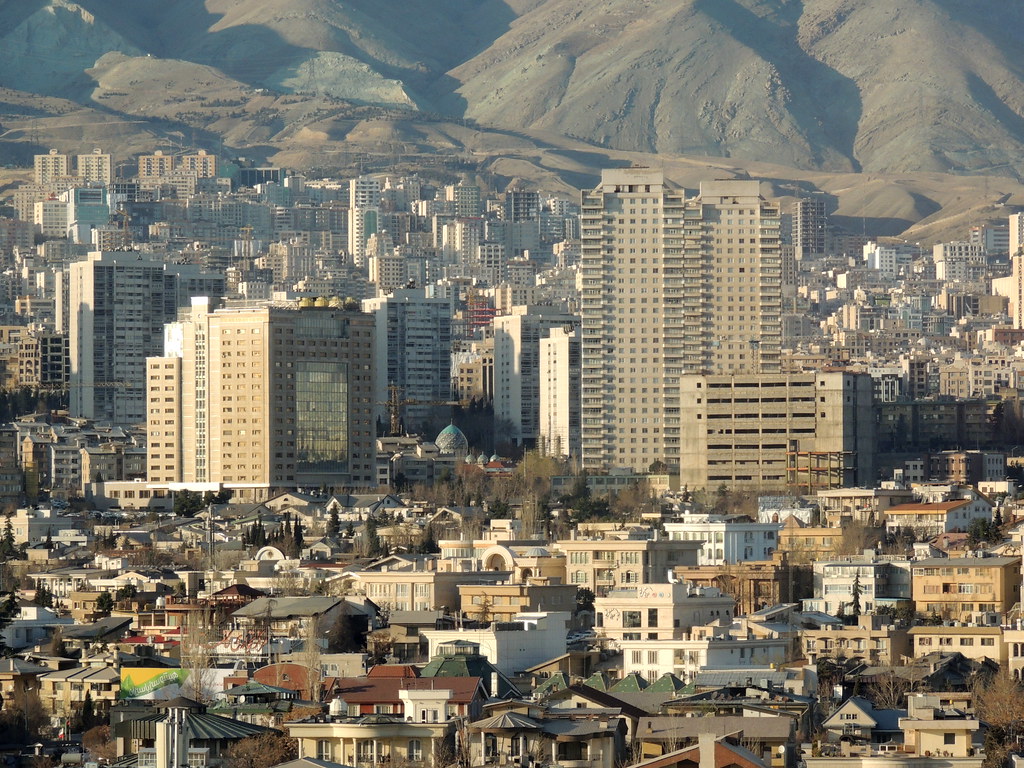 Tehran new area, Iran.
From Shiraz to Persepolis
For more than two thousand years, Shiraz , synonymous with refinement, poetry and wine, was considered the center of Persian culture and one of the most important cities in the medieval Islamic world , as well as the capital of Iran during the Zand dynasty (between 1750 and 1794).
Here you can visit the tombs of two great poets, Hafez and Saadí , whose verses celebrate the pleasure of love, wine, hunting and everything that connects daily life with the search for eternity, which have gradually become over time in important places of veneration.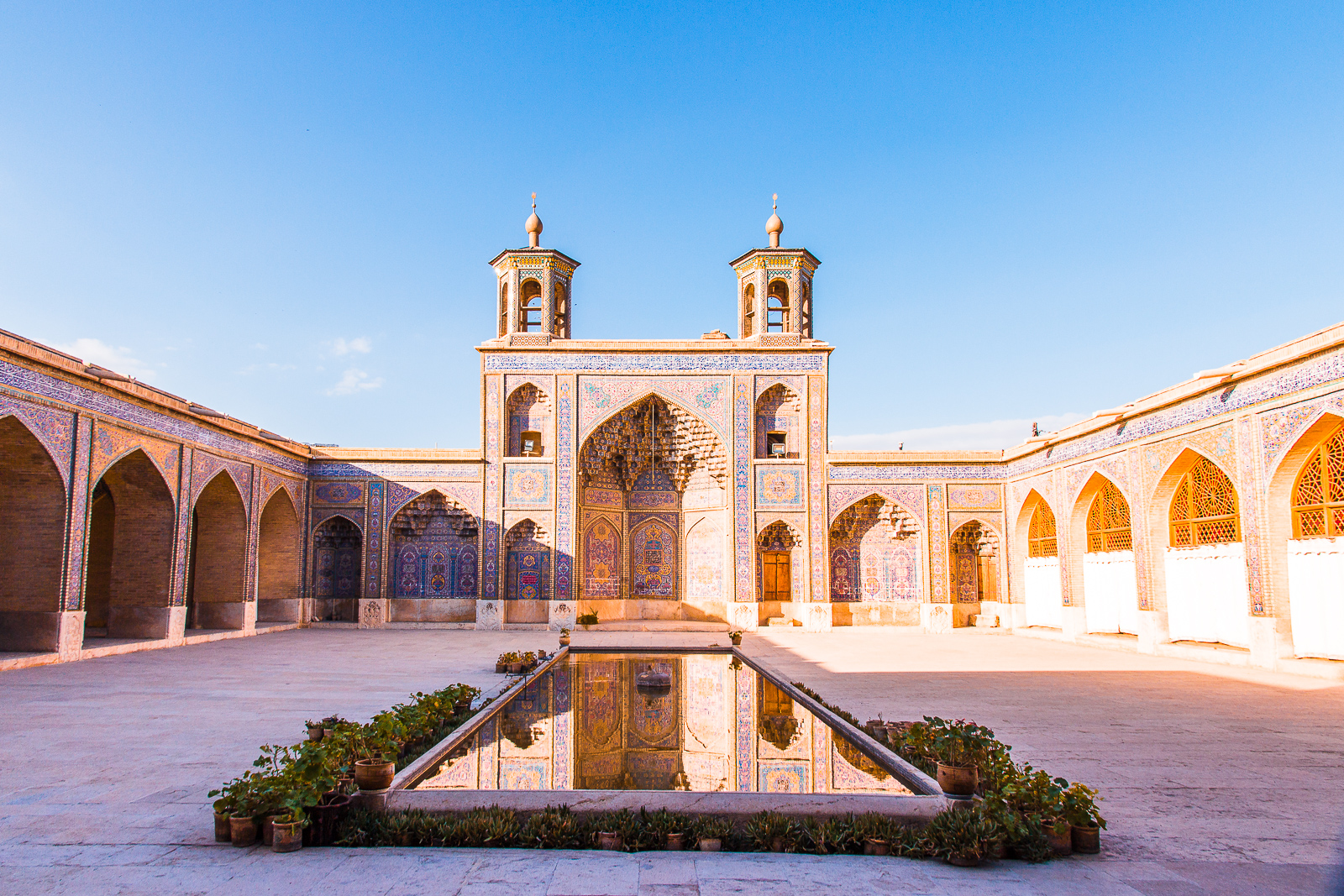 Nasir Al-Mulk Mosque in Shiraz, Iran.
Coral, the guide, tells us that Persepolis was the capital of the Persian Empire during the Achaemenid era. Its growth began in 518 before Christ on the mountain of La Misericordia, by order of Darío I. Its construction continued for two centuries until the partial destruction by Alexander the Great -although this is not proven- in 331 before Christ. Its last king was Darius III. Persepolis Palace, Iran.
A World Heritage Site since 1979, it measures 125,000 square meters and includes a huge palace complex with buildings that had ritual, protocol and administrative functions, as well as royal apartments, administration of the treasury and royal tombs, and extensive gardens.
Naqsh-e Rostam, Pasargadae and Yazd
Although historians are still debating whether or not it is true, it seems that in Naqsh-e Rostam there are the tombs of Darius II, Artaxerxes I, Darius I and Xerxes I, located from left to right, with representations of scenes of conquests and ceremonies real. Naqsh-e Rustam (or Naqsh-e Rostam) Iran.
Yazd was founded 5,000 years ago and is famous for its qanats (underground aqueducts), which can be admired in the Water Museum. The city offers a quiet walk through its labyrinth of streets full of history, with a mixture of people, among which there is a percentage that still follows the Zoroastrian religion.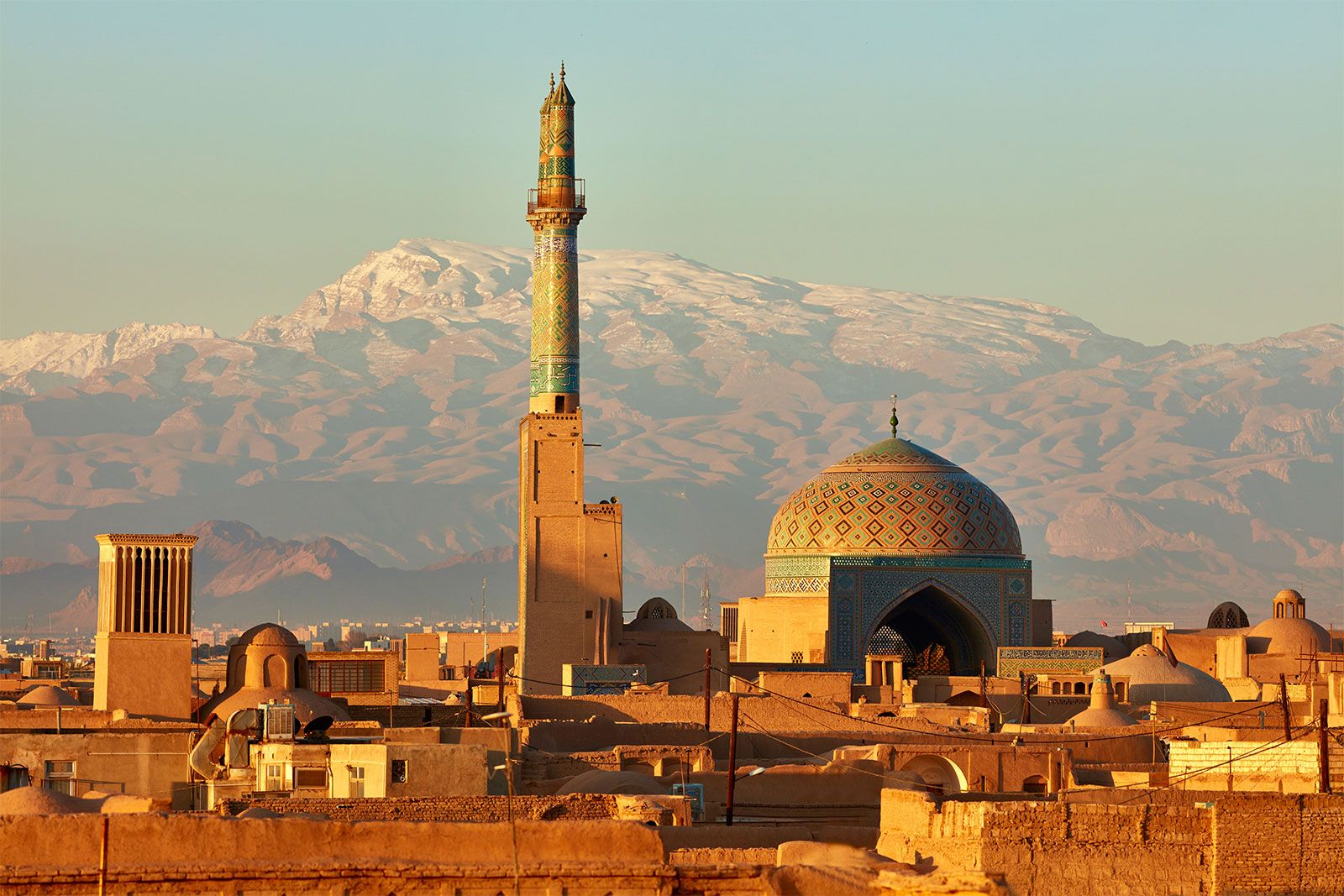 The ancient city of Yazd, Iran.
The peculiar Isfahan
In the old part of the city of Isfahan, one of the oldest settlements in the world , according to UNESCO, which included it on the world heritage list, the Jameh Mosque rises , with an entrance portal that is one of the highest of Iran, flanked by two 48-meter-high minarets and decorated with 15th-century inscriptions.
This city is the third city in the country and a “must do” destination if we visit Iran, recommended for its outstanding Islamic buildings, its craft workshops, its large avenues populated with trees, like a great natural museum; its historic bazaar and its square, considered a UNESCO World Heritage Site. Naqsh-e Jahan Square, Isfahan, Iran.
Naqsh-e Jahan Square is pedestrianized, but many horse-drawn carriages circulate through it. It measures 512 meters long by 163 meters wide (the second largest in the world). It was designed in 1602 to show the importance of the city as the capital of a powerful empire.
At sunset, with its modern fountains, added by the Pahlavis, when the minarets and domes light up and shine with the last rays of the sun and the mountains offer us their reddish tones in the distance, the bustling square gives us a whole show of tiles , lights and crowd that comes and goes.
In Ali Qapu, a visit to the Ali Qapu Palace , from the 18th century, opposite the Sheikh Lutfallah Mosque , and the essential bazaar, is also a must.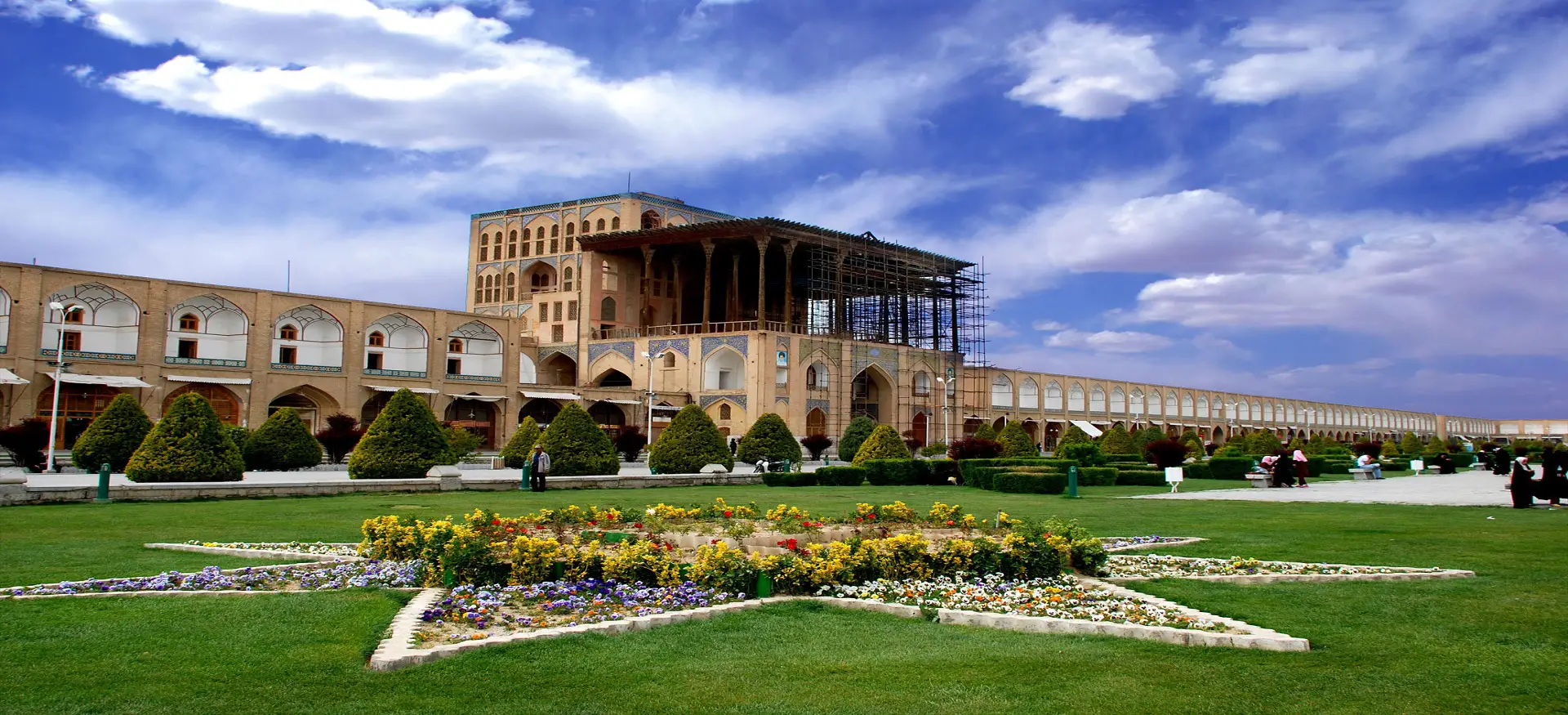 Ali Qapu Palace, Isfahan, Iran.
Also the ecological camp Matin Abad, near this city, in the central desert, which offers comfortable accommodation in tents, rooms or cabins, as well as camel rides or on foot through landscapes of sand dunes and gorges between mountains. Due to its proximity, you can also visit the Agha Ali Abbas sanctuary .
Another curiosity within this province of Isfahan is Abyaned, on the slopes of Mount Karkas, with mud houses that harden more with the rain, one of the most extraordinary towns due to its climate and natural position. Bagh-e Narenjestan garden, Iran.
Another nearby natural wonder, located in Kashan, is the Garden of Fin or Bagh-e Fin , in its present form built under the reign of Abbas I, in the 16th century. The garden subsequently suffered from increasing neglect and was damaged several times until in 1935 it was included in the list of national treasures of Iran. In 2011, this and other representative gardens were inscribed on the list of World Heritage Sites.