

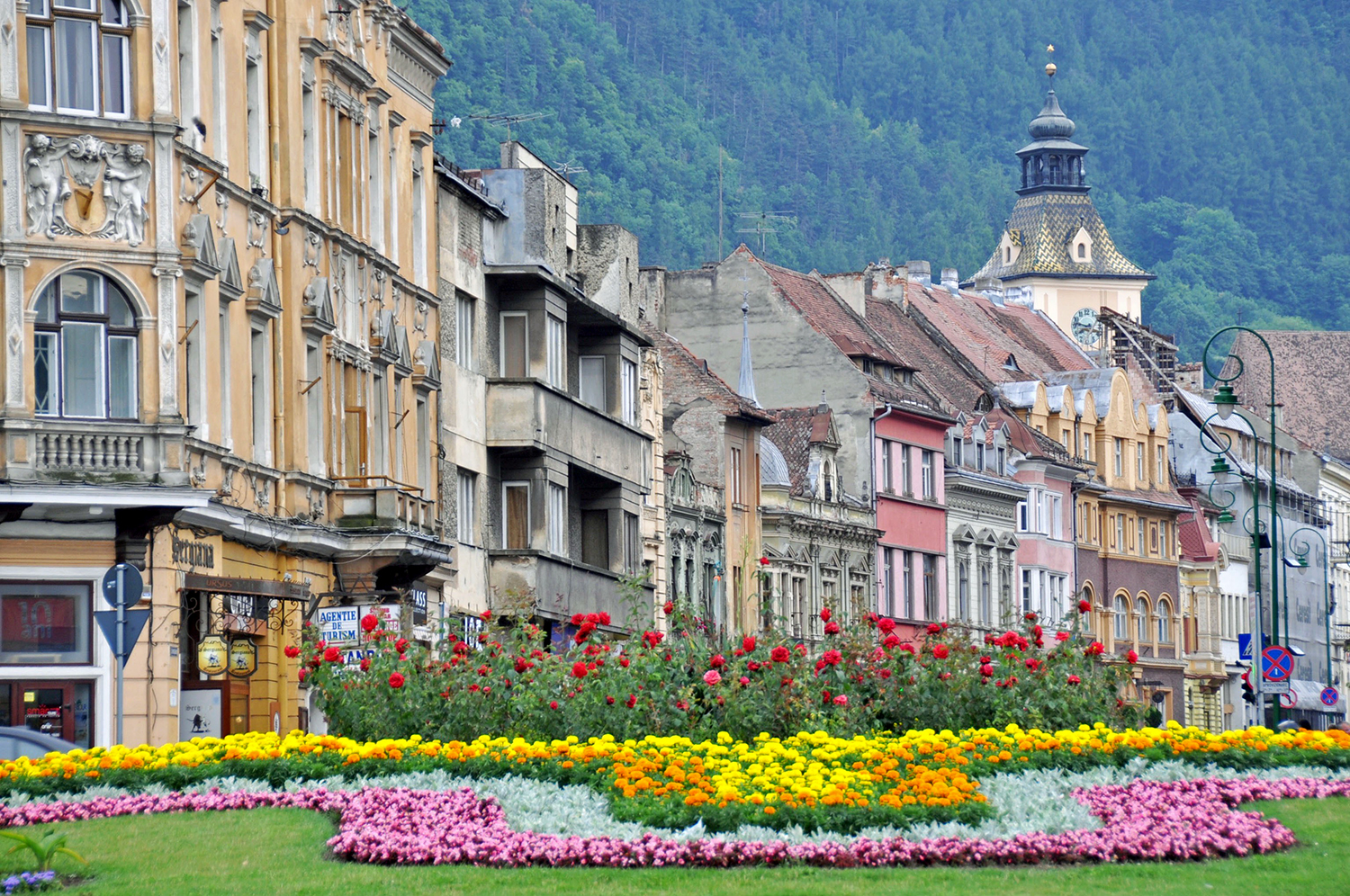
In general, we consider something surprising when what we see in reality has nothing to do with what we had previously imagined. Currently, we receive so much information of all kinds -photos or videos, comments from friends, news, social networks…- that we draw in our minds a biased idea of the destination we are traveling to.
Romania is a good example. Due to its conflictive past, its geographical location or our treacherous ignorance, it is not one of those destinations that most of us have in mind when we think of traveling. “In my country”, explains Florin Cristea, Civitatis local guide in Romania, “there have been fundamental changes in a relatively short period of time and, in recent years, it has become a place where you can discover wonderful corners and live extraordinary experiences.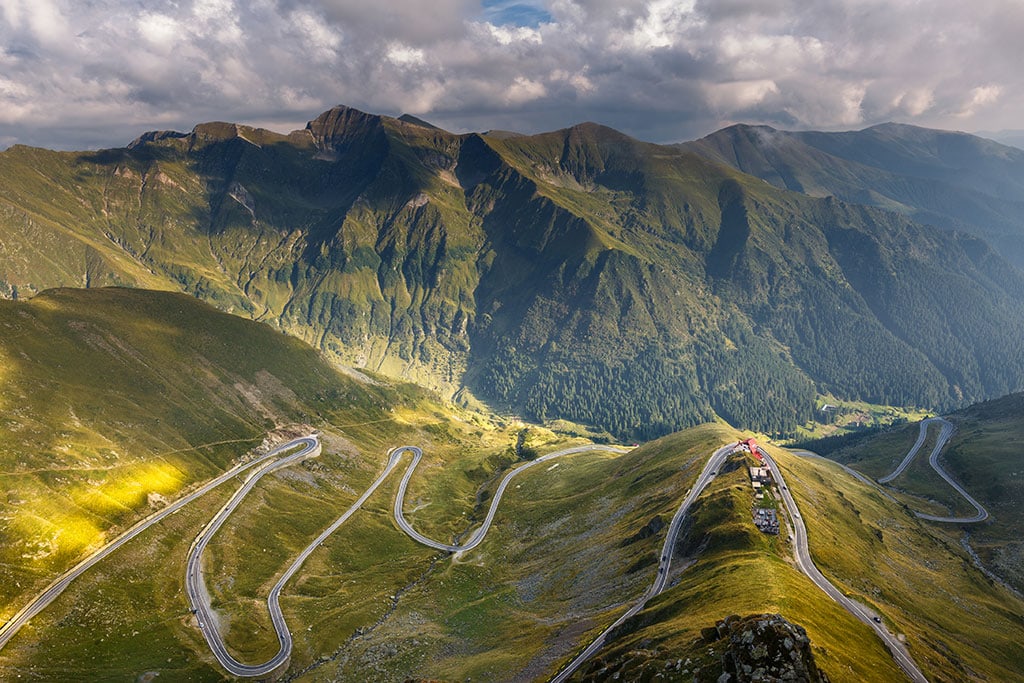 Transfagarasan road, Romania.
The traveler perceives the imprint of almost 45 years of communism and 20 years of transition to democracy
What are those changes you are referring to?
I was born in Brasov, in Transylvania, in 1981. At that time, my country belonged to the communist bloc, on the eastern side of the famous Churchillian expression iron curtain. I grew up in the middle of the totalitarian communist regime, which ended in 1989 with the revolution and the consequent end of the dictatorship.
Is this how the travel ban was opened?
Yes, indeed, since 2006, with the decisive opening of the country to the West, I had the opportunity to work and travel with a company that produced shows for cruise ships, hotels and casinos. Over the next 10 years, we visited more than 130 countries on all continents, including Antarctica. I also have an extraordinary memory of Spain, the country that remained embedded in my soul.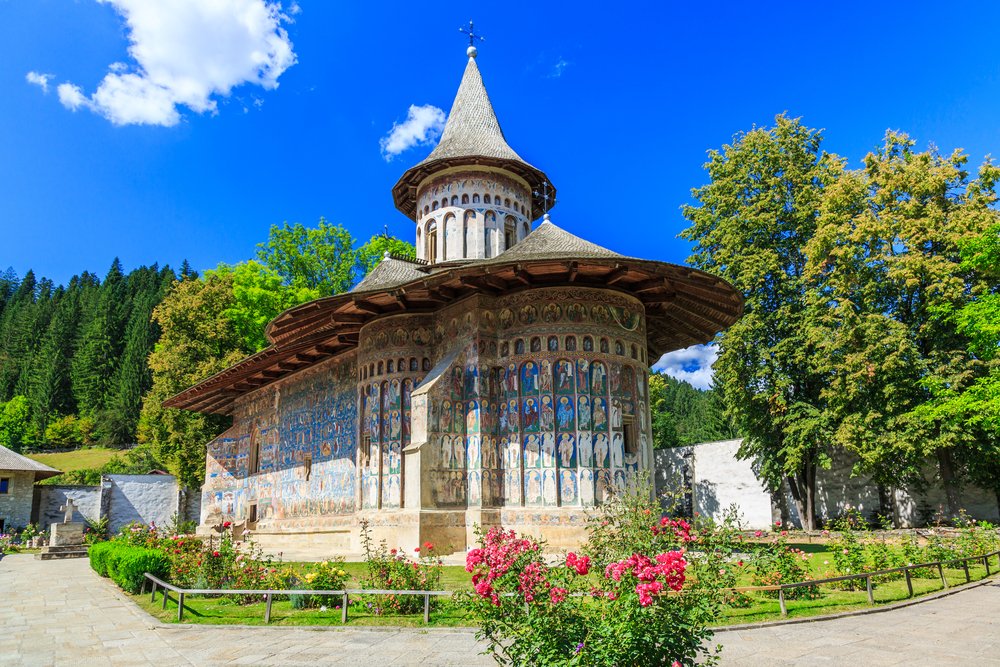 One of the painted monasteries of Bucovina.
And Romania was also opened to the outside…
Of course. Today, Romania is completely open to the world, it is a welcoming place, connected to Europe and increasingly safe. The people are hospitable and friendly.
What’s so special about it?
There are many things, really. It could be said that there is a Romania for every traveler. I would highlight its extraordinary mixture of cultures and traditions, from the historic province of Transylvania, full of villages and fortified churches, medieval cities, fortresses and castles, to Moldova, with monasteries protected by Unesco, a disturbing history, nature in its purest state and a very genuine gastronomy.
The first advice would be to leave behind all preconceived ideas about Romania
What advice would you give me if I decided to make my first trip?
The first piece of advice would be to leave all preconceived ideas about Romania behind and want to get to know each other. That is critical.
Any practical advice?
The official currency is called leu, although you can also find it as “rum”. I advise you to change at the airport only what is strictly necessary for a taxi or if you have to go to the city. In general, card payment devices are available in shops, restaurants and hotels.
And as for transportation?
Trains and buses between the main cities and Bucharest are cheap and punctual, perhaps not the fastest, but quite comfortable and picturesque. On the Bucharest-Brasov route, for example, the frequencies are optimal and the landscape will enchant you.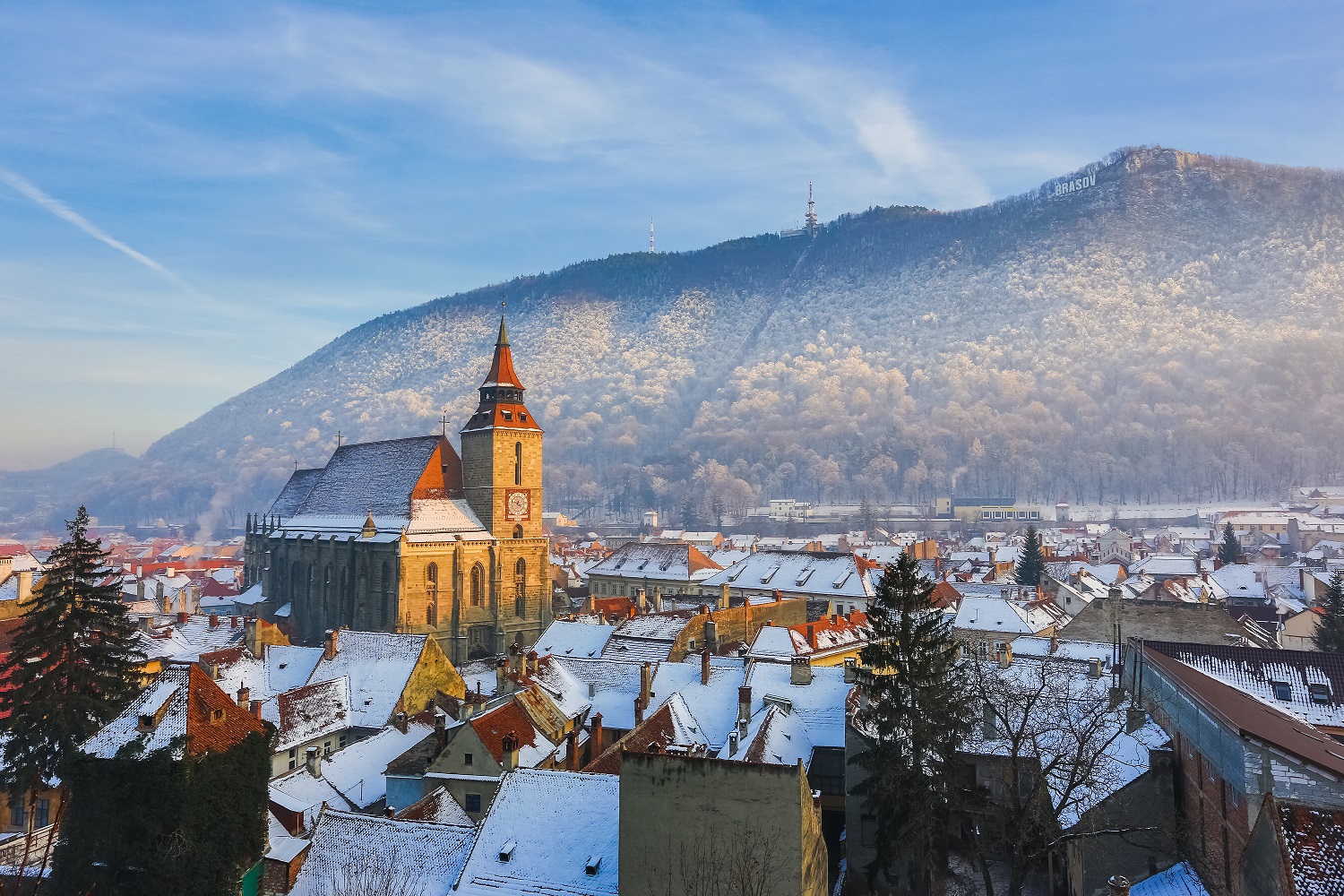 Brasov, city of Romania.
Let’s cut to the chase: what can’t I miss?
To begin with, medieval Transylvania with its cities like Brasov or Sighisoara, with the fortresses of the 12th and 13th centuries like Rasnov or Rupea, the castle of Bran, fortified churches protected by Unesco like Prejmer or Harman, rural sites like Viscri, a place, by the way, that captivated Prince Charles of England so much that he bought a traditional house there and has become an ambassador of Transylvania and Romania.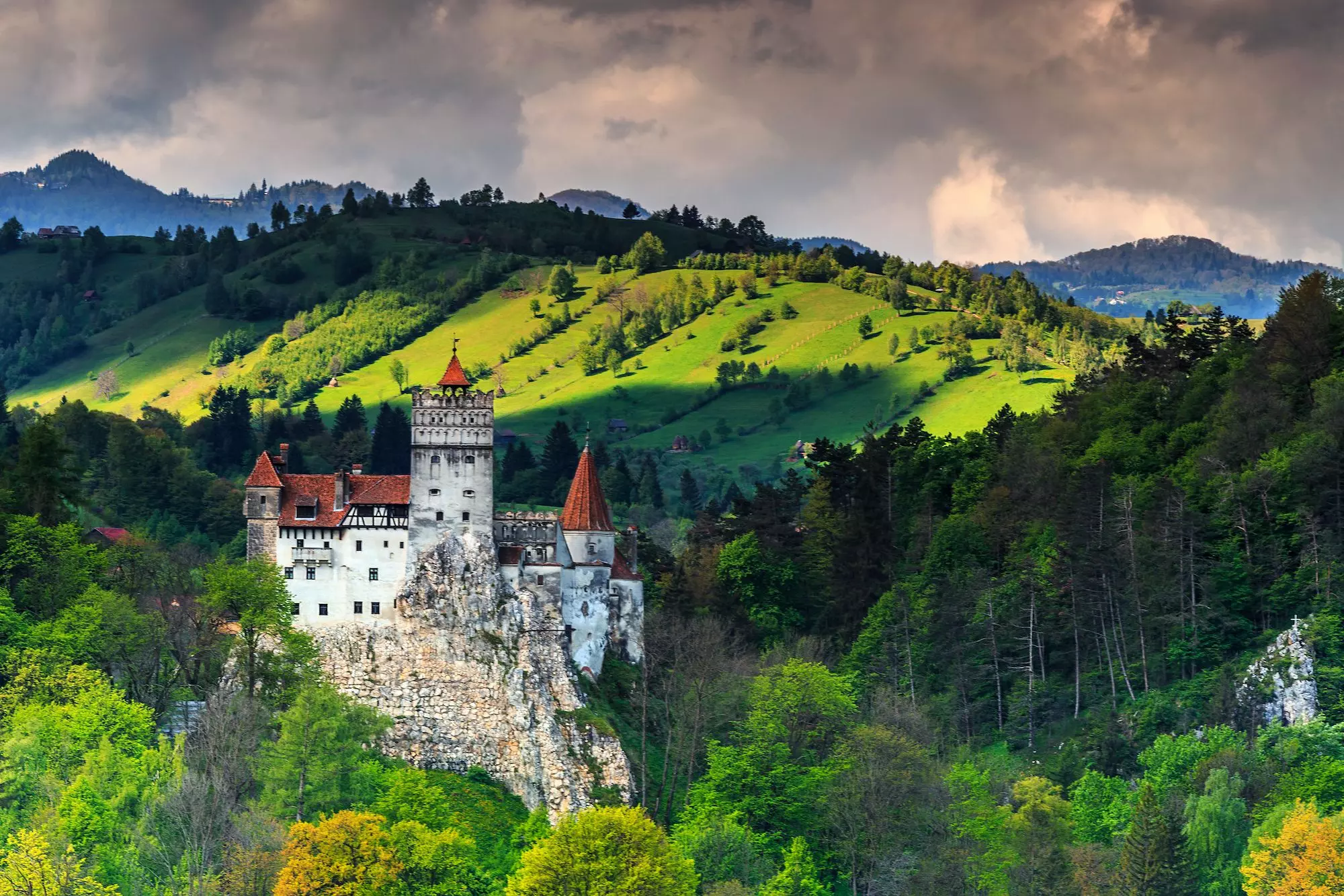 Bran Castle at dusk.
There we also find Dracula…
Of course, one cannot ignore the most famous Romanian of all time, the Wallachian warrior prince Vlad Tepes, the Impaler, known by the nickname of Dracula, whose story inspired the legend of vampires in more than 250 films. Many travelers usually make a route following the settings of the novel and the characters of Bram Stoker, the Irish writer who wrote the story of the legendary vampire in 1897.
My recommendations are Bucovina, the northeastern region, and Maramures, with its impressive wooden churches.
Now take us to the most unknown Romania…
My two most special recommendations are the northeastern region, Bucovina, with its Orthodox monasteries, especially the painted ones: Humor, Voronet, Moldovita or Sucevita. There you can discover the peace of rural Romania and the Orthodox roots of our country, especially in what is the scene of the Angel of the Last Judgment in the Voronet monastery, nicknamed the “Sistine Chapel of the Orthodox world”.
Any other secret or curiosity?
As I am passionate about recent history, I recommend discovering without complexes the stage before the communist period. In that sense, a must-see is the magnificent Peles Castle, the former summer residence of the kings of Romania. Did you know that the famous Orient Express stopped in Sinaia, at Peles Castle, and tourists in the early 20th century were invited to dinner at the castle? Speaking of cities and buildings, did you know that Bucharest has the largest and heaviest administrative building in the world? It is the Casa del Pueblo, the construction that changed the view of the capital; a megalomaniac project of former dictator Nicolae Ceausescu.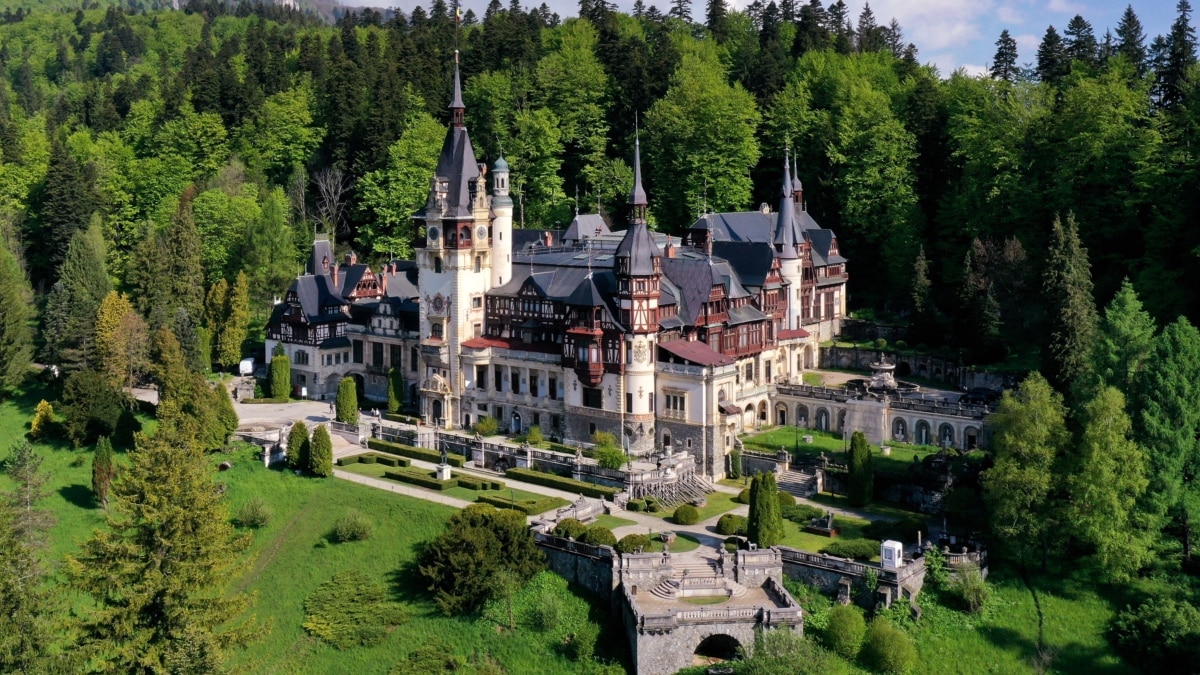 Peles Castle, Romania.
And a route to do by car?
Anyone who likes to drive should know that, according to the producers of the prestigious Top Gear car series, Romania has “the best road in the world”: the Transfagarasan, which crosses the Carpathians at an altitude of more than 2,000 metres. It was built in the 70’s as a military route and today it is an exceptional road trip route or, for the bravest, a real bike challenge.


