


Thailand Tourism (TAT), in collaboration with the country’s National Astronomical Research Institute, have launched the Amazing Dark Sky in Thailand project, where twelve so-called “dark sky conservation” areas are exposed for stargazing in five regions from Thailand. Likewise, as part of the project, a travel guide has been created with recommended routes to observe the stars and obtain the astronomical knowledge necessary to observe the sky in a simple and accessible format.
A travel guide includes recommended routes for stargazing and astronomical knowledge in a simple and accessible format

Night landscape on the Thai coast.turismotailandes.com
Astronomical tourism
This project starts with the aim of promoting astronomical tourism and raising awareness about light pollution and the preservation of calm and dark skies. It is one more among the experiences that Thailand proposes to those who visit the country. Thus, fans of stargazing and astronomical phenomena such as meteor showers and eclipses can do so and combine it with other attractions and tourist activities in different parts of the country.
The project has so far listed twelve locations that meet the criteria for achieving dark sky conservation area status. Specially selected staff in each dark sky conservation area will provide visitors with basic astronomical knowledge, which they will enjoy in the dining and lodging areas.
Dark sky conservation areas to enjoy a stargazing trail have been classified into three categories: National Parks, Communities, and Private Properties.
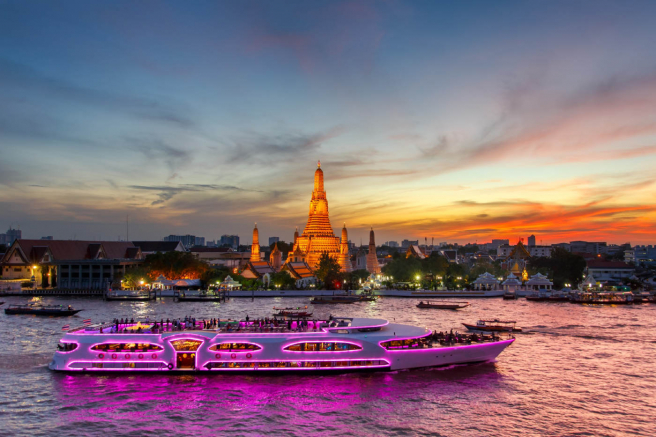
Night cruise experience.turismotailandes.com
Areas in National Parks
They are areas where the night sky is preserved to have adequate darkness and there is no light pollution that affects the ecosystem. These areas are ideal places for learning about ecotourism and astronomical tourism that serve to increase public awareness of the impact of light pollution. In these National Parks, the darkness of the sky allows you to see celestial objects such as planets, stars, constellations, star clusters, nebulae or the Milky Way with the naked eye. The areas that make up the list are: Huai Nam Dang National Park (Chiang Mai), Pha Taem National Park (Ubon Ratchaburi), Phu Khieo-Thung Kraman Wildlife Sanctuary (Chaiyaphum), Pa Hin Ngam National Park (Chaiyaphum ) and Phu Langka (Chaiyaphum) National Park.
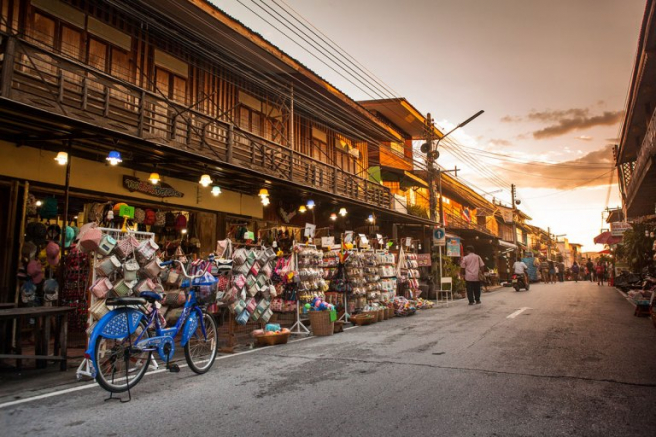
Dusk on a street in Chiang Khan.turismotailandes.com
Dark sky communities
They are dark sky conservation areas in communities, towns and municipalities that maintain and preserve adequate darkness for astronomical tourism. Thanks to the cooperation and support of the people, there is hardly any light pollution that affects the ecosystem. Astronomical observations, in addition to being an ecotourism and astronomical attraction, help spread awareness and awareness among the population about the impact of light pollution . On the list is the On Tai Community in San Kamphaeng District (Chiang Mai).
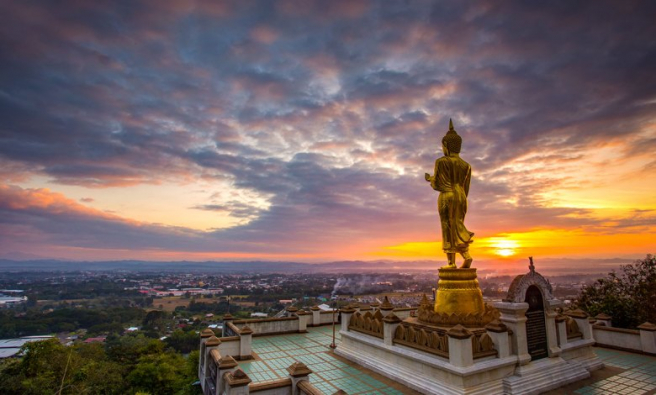
View over the old city of Nan.turismotailandes.com
Hotels, farms and resorts
These properties are dark sky conservation areas in private spaces such as resorts, hotels, and farms that become learning centers that preserve the night sky to be properly dark and not cause light pollution. On the list are the following private properties: Alcidini Vineyard in Pak Chong District (Nakhon Ratchasima), Raintree Residence Hotel in Khao Yai (Nakhon Ratchasima), Muak Lek ATV Stadium in Muak Lek District (Saraburi), Ban Rai Yai Cha Phlu in Muak Lek District (Saraburi), The Piano Resort in Pak Chong District (Nakhon Ratchasima) and the Grand-Mount Vineyard in Pak Chong District (Nakhon Ratchasima).


